Physiotherapy
Personalized care for pain, injury recovery, mobility, strength, and return to daily activity.
- Back pain
- Neck pain
- Shoulder pain
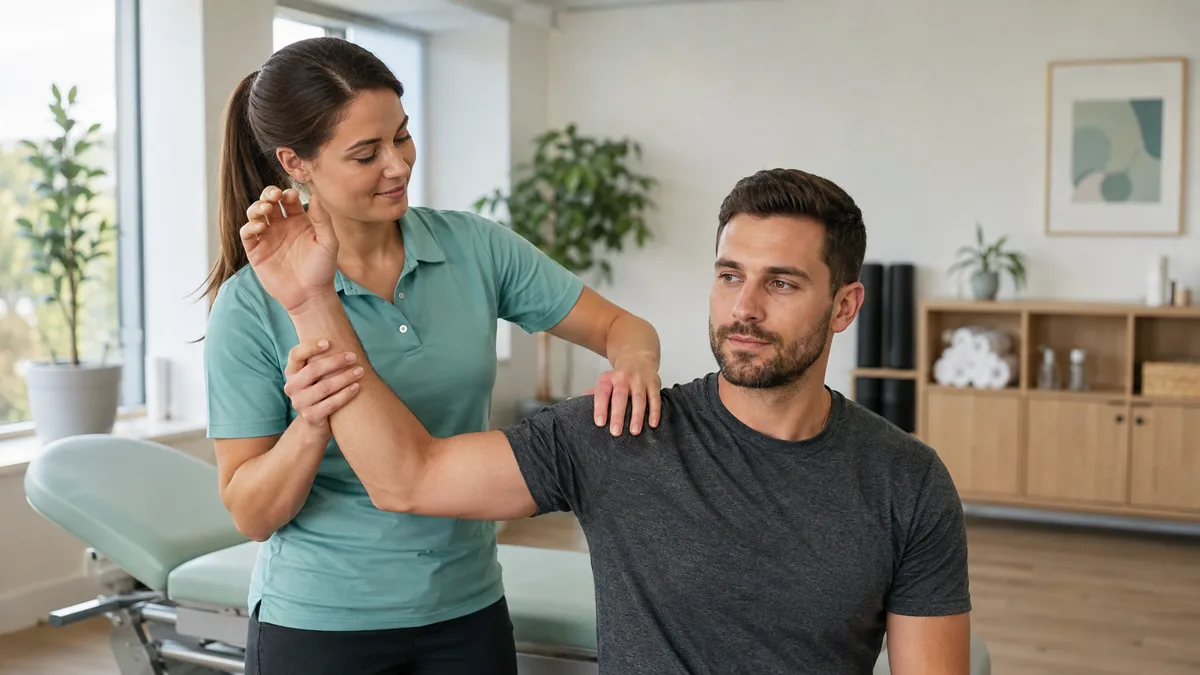
Movement-based rehabilitation to help you rebuild strength, improve mobility, restore confidence, and return to daily life after injury or pain.
Kinesiology is the study of human movement. A kinesiologist uses exercise to help you recover from injury, manage pain, and build strength, endurance and confidence. It is often called active rehab, because you do the work while your kinesiologist guides, coaches and progresses each step.
Kinesiologists typically hold a university degree in kinesiology or a related field. They often work alongside physiotherapists, picking up once you are ready to move from early treatment into building capacity for work, sport and daily life.
Active rehab is a common part of recovery after a car accident or workplace injury, and is also used for long-term conditions, deconditioning after illness, and performance goals.
Exercise prescription
A structured program of strength, mobility, balance and conditioning exercises built around your assessment.
Supervised training
One-on-one sessions where your kinesiologist coaches technique and adjusts the load as you go.
Graded activity
Gradually increasing the amount and difficulty of activity, so your body adapts without unnecessary flare-ups.
Work and sport conditioning
Exercises that mirror the demands of your job or sport, such as lifting, carrying or running drills.
Home and gym programs
A plan you can follow on your own, with clear instructions and progressions.
Kinesiology / Active Rehab may support a range of concerns. Your practitioner will assess your needs and recommend an appropriate plan.
Movement assessment
Your kinesiologist reviews your history and looks at how you move, along with your current strength, mobility and tolerance for activity.
Goal setting
You agree on specific, practical goals — such as lifting a laundry basket, returning to full shifts, or getting back to a sport.
Exercise prescription
They design a program for your starting point and explain what each exercise is for.
Progressive rehab plan
Sessions build gradually, increasing load and complexity as your capacity improves.
Ongoing adjustments
Progress is reviewed regularly, and the plan changes as you reach milestones or if symptoms flare.
Because our physiotherapists, RMTs, and a kinesiologist work under one roof, your kinesiology care can be coordinated with other treatments when helpful — so your recovery feels more connected and complete.
Personalized care for pain, injury recovery, mobility, strength, and return to daily activity.
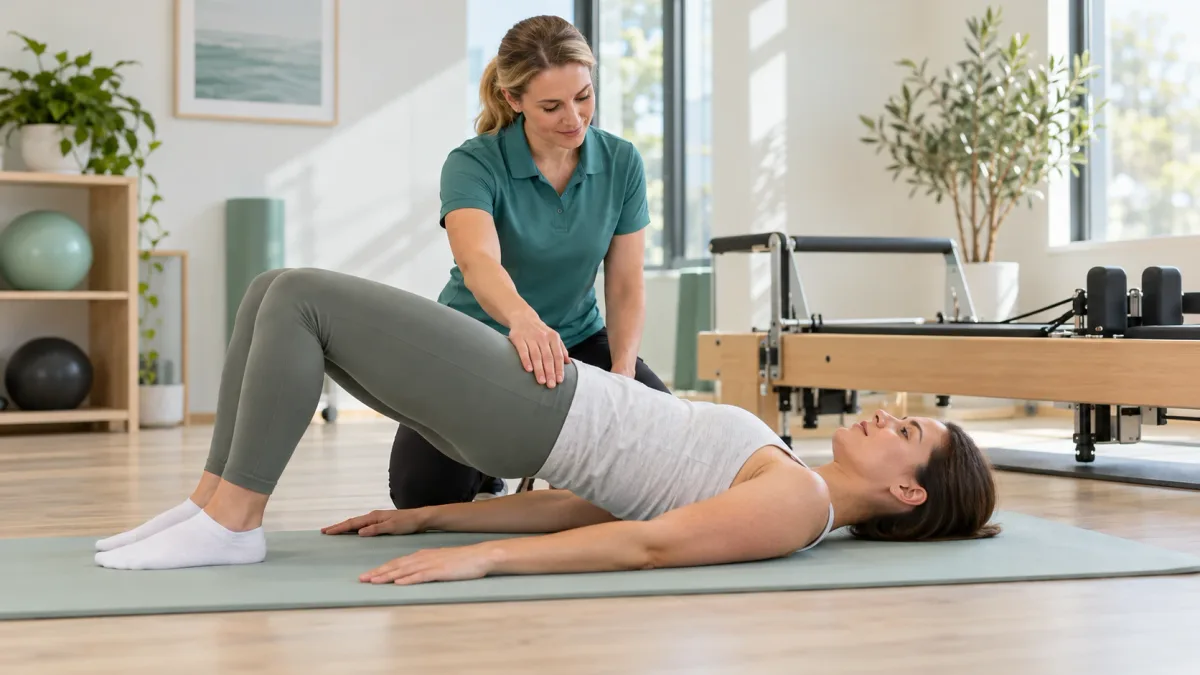
Practitioner-guided, Pilates-based exercise to build core control, posture, and confident movement.

Guided treatment support after motor vehicle accidents, with care options based on your needs.
Kinesiology is often misunderstood. Here's a simple look at what a kinesiologist does and when active rehab might be a good fit.
Read articleOnce initial pain settles, active rehab often becomes the next step in recovery. Here's how it fits into a post-accident plan.
Read articleKinesiology focuses on movement-based, exercise-driven rehabilitation, often working alongside physiotherapy or as a follow-on to it. Your practitioner can help you understand which fits your current stage of recovery.
Didn't find your answer?
Kinesiology / Active Rehab in Maple Ridge and nearby. Patients travel to our 238B Street clinic from across the area — see what care looks like in Pitt Meadows, Albion, Silver Valley and Websters Corners, or browse every area we serve.
Book online in minutes, or contact our team if you're not sure which service is right for you.