Physiotherapy
Personalized care for pain, injury recovery, mobility, strength, and return to daily activity.
- Back pain
- Neck pain
- Shoulder pain
Shockwave therapy may be used as part of a treatment plan for certain tendon, muscle, and soft tissue concerns.
Shockwave therapy (extracorporeal shockwave therapy, or ESWT) delivers pulses of acoustic energy into tissue through a handheld applicator placed on the skin. It is most often used for long-standing tendon and soft tissue problems that have not settled with other care, such as plantar fasciitis or tendon pain around the heel, elbow or shoulder.
The pulses are thought to stimulate the body's healing response and reduce pain sensitivity in the treated area. Shockwave is usually one part of a broader plan, alongside exercise and load management, rather than a stand-alone fix.
There are two main types of device, radial and focused, which reach different depths in the tissue. Treatment is usually given as a short course of sessions spaced several days to a week apart, and your practitioner will explain the plan for your condition.
Shockwave sessions
Short treatments — usually a few minutes per area — using a handheld applicator and gel on the skin.
Exercise and tendon loading
Strengthening exercises that work alongside shockwave to help the tissue adapt.
Load management
Advice on adjusting activity, footwear or training while the tissue recovers.
Supporting options
Where helpful, orthotics, taping or bracing may be part of the same plan.
Shockwave Therapy may support a range of concerns. Your practitioner will assess your needs and recommend an appropriate plan.
Assessment
Your practitioner confirms what is likely causing your pain and whether shockwave is a reasonable option.
Suitability check
They screen for reasons shockwave may not be appropriate, such as pregnancy, blood-clotting problems or certain implants.
Treatment session
Gel is applied and the applicator is moved over the area, at an intensity you can tolerate.
Progress review
Your response is reviewed over the course, and the plan is adjusted alongside your exercises.
Because our physiotherapists, RMTs, and a kinesiologist work under one roof, your shockwave care can be coordinated with other treatments when helpful — so your recovery feels more connected and complete.
Personalized care for pain, injury recovery, mobility, strength, and return to daily activity.
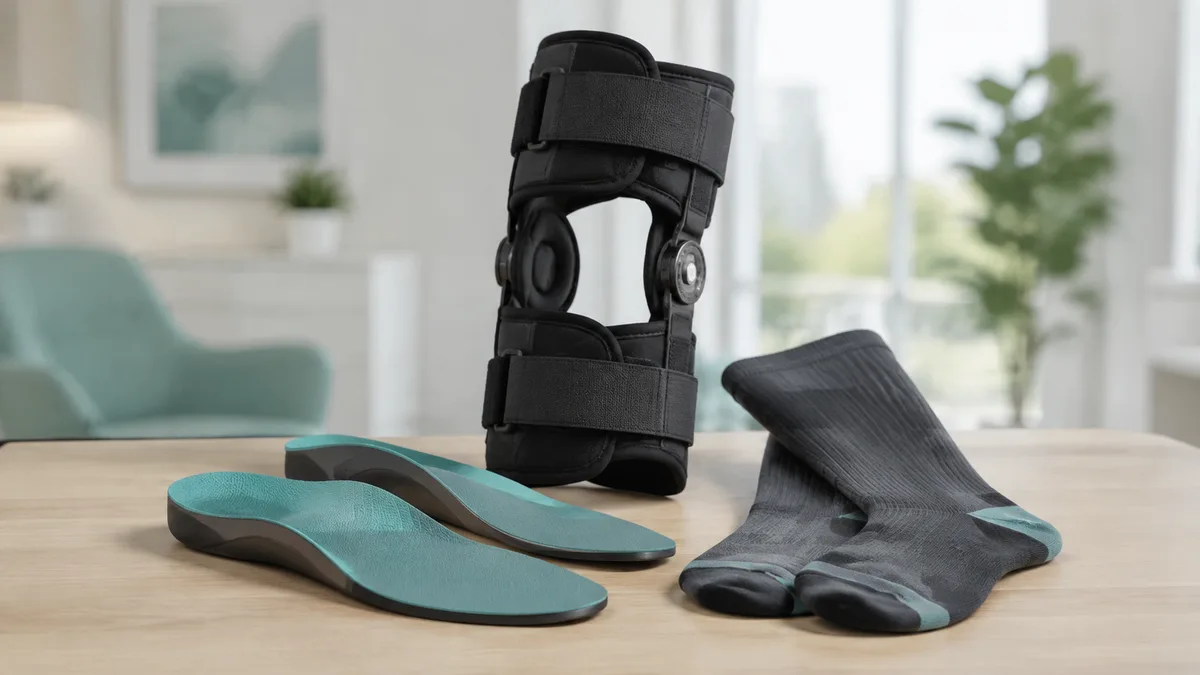
Support movement, comfort, and recovery with orthotics, braces, compression garments, and related mobility solutions when appropriate.

Movement-based rehab to rebuild strength, mobility, confidence, and function.
Shockwave therapy is a common option discussed for stubborn plantar fasciitis. Here's a plain-language look at how it works and what to expect.
Read articleNot all foot pain needs orthotics — but for some people, they can be a helpful part of a plan. Here's how to think about it.
Read articleShockwave therapy may be used as part of a treatment plan for certain tendon, muscle, and soft tissue concerns, but it is not appropriate for everyone. Your practitioner will determine if this is appropriate for you after an assessment.
Didn't find your answer?
Shockwave Therapy in Maple Ridge and nearby. Patients travel to our 238B Street clinic from across the area — see what care looks like in Pitt Meadows, Albion, Silver Valley and Websters Corners, or browse every area we serve.
Book online in minutes, or contact our team if you're not sure which service is right for you.